
Introduction to Sprint Fungicide
Sprint Fungicide is a modern agricultural fungicide widely used by farmers and growers to protect crops from a broad range of fungal diseases. In today’s intensive farming systems, fungal infections can significantly reduce yield, quality, and market value. Sprint Fungicide plays a crucial role in safeguarding crops by offering reliable disease control, preventive protection, and curative action when applied correctly.
Table of Contents
Sprint Fungicide is trusted for its fast action, long-lasting protection, and compatibility with integrated pest management programs. This detailed guide explains everything you need to know about Sprint Fungicide, including its composition, mode of action, benefits, application methods, safety measures, and best practices for achieving maximum results.
What is Sprint Fungicide?
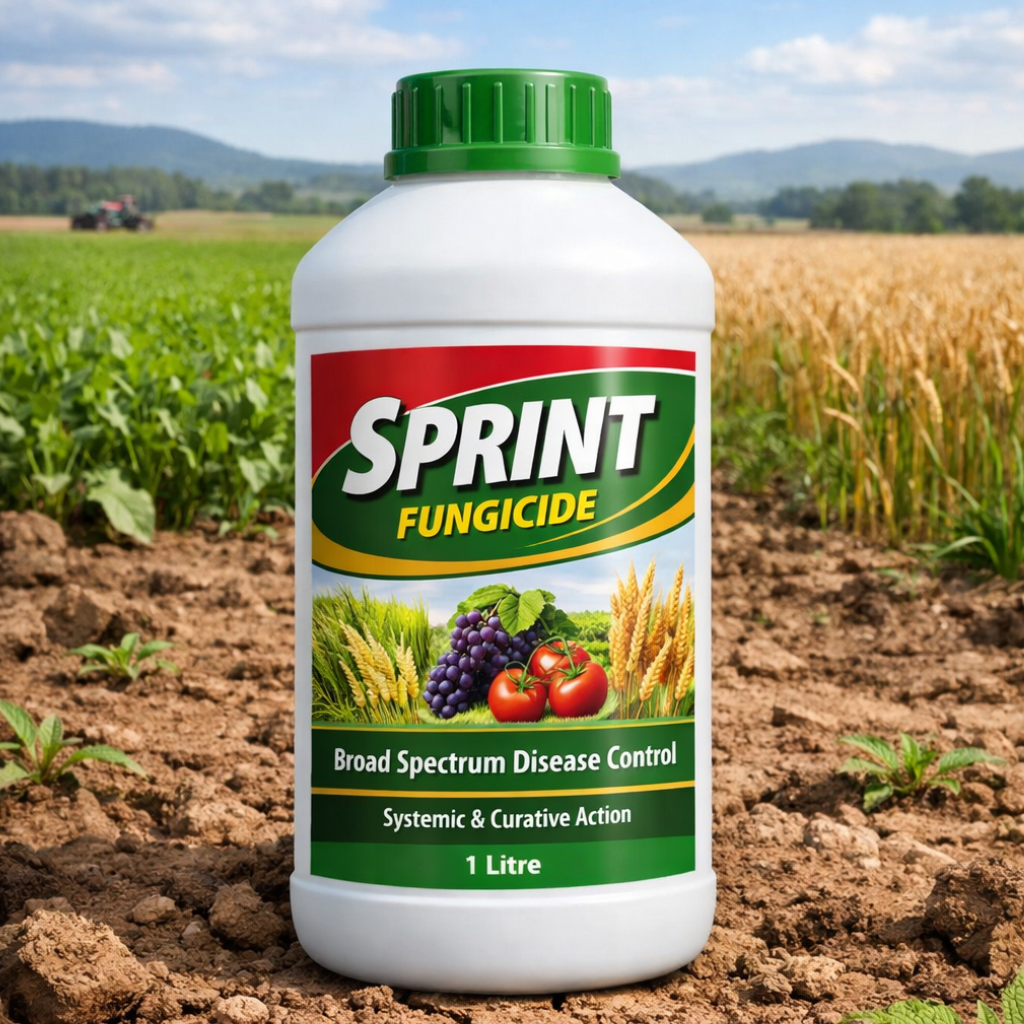
Sprint Fungicide is a systemic fungicide designed to control and prevent fungal diseases affecting cereals, vegetables, fruits, pulses, and plantation crops. It is formulated to penetrate plant tissues and protect crops from inside, making it effective even after infection has begun.
Key Characteristics of Sprint Fungicide
- Broad-spectrum disease control
- Systemic and translaminar action
- Preventive and curative properties
- Suitable for multiple crops
- Easy to mix and apply
Sprint Fungicide is commonly recommended by agricultural experts due to its consistent performance under different climatic conditions.
Composition and Mode of Action of Sprint Fungicide
Sprint Fungicide contains active ingredients that interfere with fungal cell development and reproduction. Once sprayed, Sprint Fungicide is absorbed by plant tissues and translocated to other parts, ensuring complete protection.
How Sprint Fungicide Works
- Inhibits fungal spore germination
- Blocks mycelial growth
- Prevents spread of infection
- Provides long residual protection
By disrupting vital metabolic processes in fungi, Sprint Fungicide stops disease progression and helps plants recover quickly.
Major Diseases Controlled by Sprint Fungicide
Sprint Fungicide is effective against a wide range of fungal diseases that commonly attack agricultural crops.
Common Diseases Managed
- Powdery mildew
- Leaf spot
- Rust
- Blight
- Anthracnose
- Downy mildew
Regular use of Sprint Fungicide helps reduce disease pressure and minimizes crop losses during critical growth stages.
Crops Protected by Sprint Fungicide
Sprint Fungicide is suitable for use on multiple crops, making it a versatile solution for farmers.
Major Crops
- Paddy (Rice)
- Wheat
- Maize
- Vegetables (Tomato, Chilli, Onion)
- Fruits (Grapes, Mango, Apple)
- Pulses and Oilseeds
Due to its systemic nature, Sprint Fungicide ensures uniform protection across plant surfaces and internal tissues.
Benefits of Using Sprint Fungicide
Sprint Fungicide offers several advantages that make it a preferred choice among growers.
Key Benefits
- Effective control of fungal diseases
- Improves crop health and vigor
- Enhances yield and produce quality
- Long-lasting protection
- Compatible with most agrochemicals
By using Sprint Fungicide, farmers can reduce repeated spraying and save on overall crop protection costs.
Dosage and Application of Sprint Fungicide
Correct dosage and application timing are critical for achieving optimal results with Sprint Fungicide.
Recommended Dosage
- Field crops: 0.5–1 ml per liter of water
- Vegetables and fruits: 1 ml per liter of water
- High disease pressure: Follow expert recommendations
Always read the product label before use, as dosage may vary depending on crop and disease severity.
Application Method
- Mix Sprint Fungicide thoroughly in clean water
- Use a knapsack or power sprayer
- Spray uniformly on both sides of leaves
- Avoid spraying during extreme heat or rain
Timely application of Sprint Fungicide ensures effective disease control and prolonged crop protection.
If you want grow your business learn Digital Marketing in Hyderabad
Best Time to Spray Sprint Fungicide
Timing plays a vital role in the effectiveness of Sprint Fungicide.
Ideal Spray Schedule
- At early disease symptoms
- During favorable conditions for fungal growth
- As a preventive spray before disease outbreak
Applying Sprint Fungicide at the right growth stage helps prevent severe infections and protects yield potential.
Resistance Management with Sprint Fungicide
Continuous use of the same fungicide can lead to resistance development in fungi. Sprint Fungicide should be used as part of a resistance management strategy.
Resistance Management Tips
- Rotate Sprint Fungicide with fungicides of different modes of action
- Avoid repeated applications in a single season
- Follow recommended doses strictly
Responsible use of Sprint Fungicide ensures long-term effectiveness and sustainable disease control.
Compatibility and Tank Mixing
Sprint Fungicide is compatible with many commonly used insecticides, fungicides, and fertilizers.
Tank Mix Guidelines
- Conduct a jar test before mixing
- Avoid mixing with highly alkaline products
- Follow label instructions carefully
Proper tank mixing improves spray efficiency and reduces labor costs while using Sprint Fungicide.
Safety Measures and Precautions
Although Sprint Fungicide is safe when used as recommended, basic safety precautions should always be followed.
Safety Guidelines
- Wear protective clothing, gloves, and mask
- Avoid contact with skin and eyes
- Do not eat or smoke during spraying
- Wash hands and equipment after use
Store Sprint Fungicide in a cool, dry place away from children and animals.
Environmental Impact of Sprint Fungicide
Sprint Fungicide is designed to have minimal environmental impact when used responsibly.
Environmental Benefits
- Low phytotoxicity
- Minimal residue when applied correctly
- Safe for beneficial organisms when used as directed
Following recommended practices ensures that Sprint Fungicide supports sustainable agriculture.
Role of Sprint Fungicide in Integrated Disease Management
Sprint Fungicide fits well into integrated disease management (IDM) programs.
Integrated Approach
- Use disease-resistant crop varieties
- Maintain proper field sanitation
- Monitor crops regularly
- Apply Sprint Fungicide when needed
This approach reduces dependency on chemicals while maintaining effective disease control.
Common Mistakes to Avoid While Using Sprint Fungicide
To maximize benefits, avoid common errors during application.
Mistakes to Avoid
- Overdosing or underdosing
- Late application after severe infection
- Spraying during unfavorable weather
- Ignoring resistance management
Correct use of Sprint Fungicide ensures consistent and reliable performance.
Storage and Shelf Life of Sprint Fungicide
Proper storage maintains the quality and effectiveness of Sprint Fungicide.
Storage Tips
- Keep in original packaging
- Store away from sunlight and moisture
- Check expiry date before use
Well-stored Sprint Fungicide retains its potency and delivers expected results.
Advanced Agronomic Benefits of Sprint Fungicide
Role of Sprint Fungicide in Plant Physiology Protection
Sprint Fungicide not only controls fungal pathogens but also indirectly supports plant physiological processes. When crops are free from fungal stress, photosynthesis efficiency improves, nutrient uptake becomes more effective, and plant energy is redirected toward growth and yield formation. Regular use of Sprint Fungicide helps maintain healthy leaf surfaces, which are critical for optimal plant metabolism.
Stress Reduction in Crops Using Sprint Fungicide
Fungal infections cause severe physiological stress in crops, leading to wilting, chlorosis, and premature leaf drop. Sprint Fungicide reduces this stress by protecting plants during critical growth stages. Healthier plants show better tolerance to environmental stress such as humidity, temperature fluctuations, and rainfall.
Weather-Based Performance of Sprint Fungicide
Effectiveness During Rainy and Humid Conditions
Sprint Fungicide performs exceptionally well during humid and rainy seasons when fungal diseases spread rapidly. Its formulation ensures strong adhesion to leaf surfaces, reducing wash-off during light rainfall. This makes Sprint Fungicide a preferred choice during monsoon crop cycles.
Performance in Dry and Semi-Arid Conditions
Even in dry or semi-arid climates, Sprint Fungicide remains effective when fungal infections are triggered by irrigation or dew formation. Proper spray timing ensures continued disease protection without unnecessary chemical load on crops.
Crop Growth Stages and Sprint Fungicide Application Strategy
Seedling Stage Protection
At the seedling stage, crops are highly vulnerable to damping-off and early leaf diseases. Applying Sprint Fungicide during early vegetative growth helps establish strong, disease-free plants, ensuring better stand establishment.
Vegetative Growth Stage Management
During active vegetative growth, fungal diseases such as leaf spot and mildew can spread rapidly. Sprint Fungicide acts as a protective shield, preserving leaf area and preventing disease escalation.
Flowering and Fruiting Stage Protection
Sprint Fungicide plays a crucial role during flowering and fruit development stages. Disease-free flowers result in better fruit set, improved size, and enhanced market quality. Farmers often include Sprint Fungicide in their spray schedule during these stages for maximum yield benefits.
Role of Sprint Fungicide in Resistance Management Programs
Understanding Fungicide Resistance
Repeated use of fungicides with the same mode of action can lead to resistance in fungal populations. Sprint Fungicide is recommended as part of a rotation strategy to reduce resistance development.
Sprint Fungicide in Rotation and Combination Programs
Farmers are advised to rotate Sprint Fungicide with fungicides having different modes of action. This integrated approach maintains long-term effectiveness and reduces dependency on a single product.
Economic Advantages
Cost-Benefit Analysis for Farmers
Sprint Fungicide offers excellent value for money by preventing yield loss and reducing the need for repeated sprays. Healthy crops require fewer corrective treatments, resulting in lower overall production costs.
Yield Improvement and Market Value
Crops protected with Sprint Fungicide show improved appearance, uniformity, and shelf life. These factors significantly increase market acceptance and selling price, especially for vegetables and fruits.
Spray Technology and Equipment for Sprint Fungicide
Recommended Spray Equipment
Sprint Fungicide can be applied using:
- Knapsack sprayers
- Power sprayers
- Tractor-mounted sprayers
Uniform droplet size and adequate pressure are essential for effective coverage.
Water Quality and Spray Volume
Using clean water with neutral pH improves Sprint Fungicide performance. Adequate spray volume ensures complete coverage of both upper and lower leaf surfaces.
Common Farmer Questions About Sprint Fungicide Use
Can Sprint Fungicide be used repeatedly in one season?
Yes, Sprint Fungicide can be used multiple times in a season, provided spray intervals and rotation guidelines are followed.
Is Sprint Fungicide suitable for export-oriented crops?
Yes, when applied as per label recommendations, Sprint Fungicide supports compliance with residue regulations for export crops.
Does Sprint Fungicide affect crop taste or quality?
No, Sprint Fungicide does not affect taste or nutritional quality when used correctly.
You have any doughts go to Faq Page
Digital Farming and Sprint Fungicide Advisory Systems
Role of Weather Forecasting in Spray Decisions
Using weather-based advisory tools helps farmers apply Sprint Fungicide at the most effective time, maximizing disease control and reducing waste.
Precision Agriculture Integration
Sprint Fungicide fits well into precision farming systems where targeted spraying reduces chemical use and increases efficiency.
Expert Recommendations for Maximum Results with Sprint Fungicide
Best Practices Summary
- Apply Sprint Fungicide at early disease stages
- Maintain proper spray intervals
- Rotate with other fungicides
- Follow label dosage strictly
Long-Term Crop Health Strategy
Including Sprint Fungicide as part of a holistic crop protection program ensures consistent disease control, improved yields, and sustainable farming outcomes.
Final Expert Conclusion on Sprint Fungicide
Sprint Fungicide stands out as a reliable, farmer-trusted solution for fungal disease management across diverse crops and growing conditions. Its strong preventive action, compatibility with modern farming practices, and economic benefits make it an essential component of professional crop protection programs.
When used responsibly and strategically, Sprint Fungicide not only protects crops from disease but also contributes to higher productivity, better quality produce, and long-term agricultural sustainability.